
The most difficult decision in keloid management is rarely which therapy to try first. It is recognizing when a keloid has moved beyond the scope of first-line care.
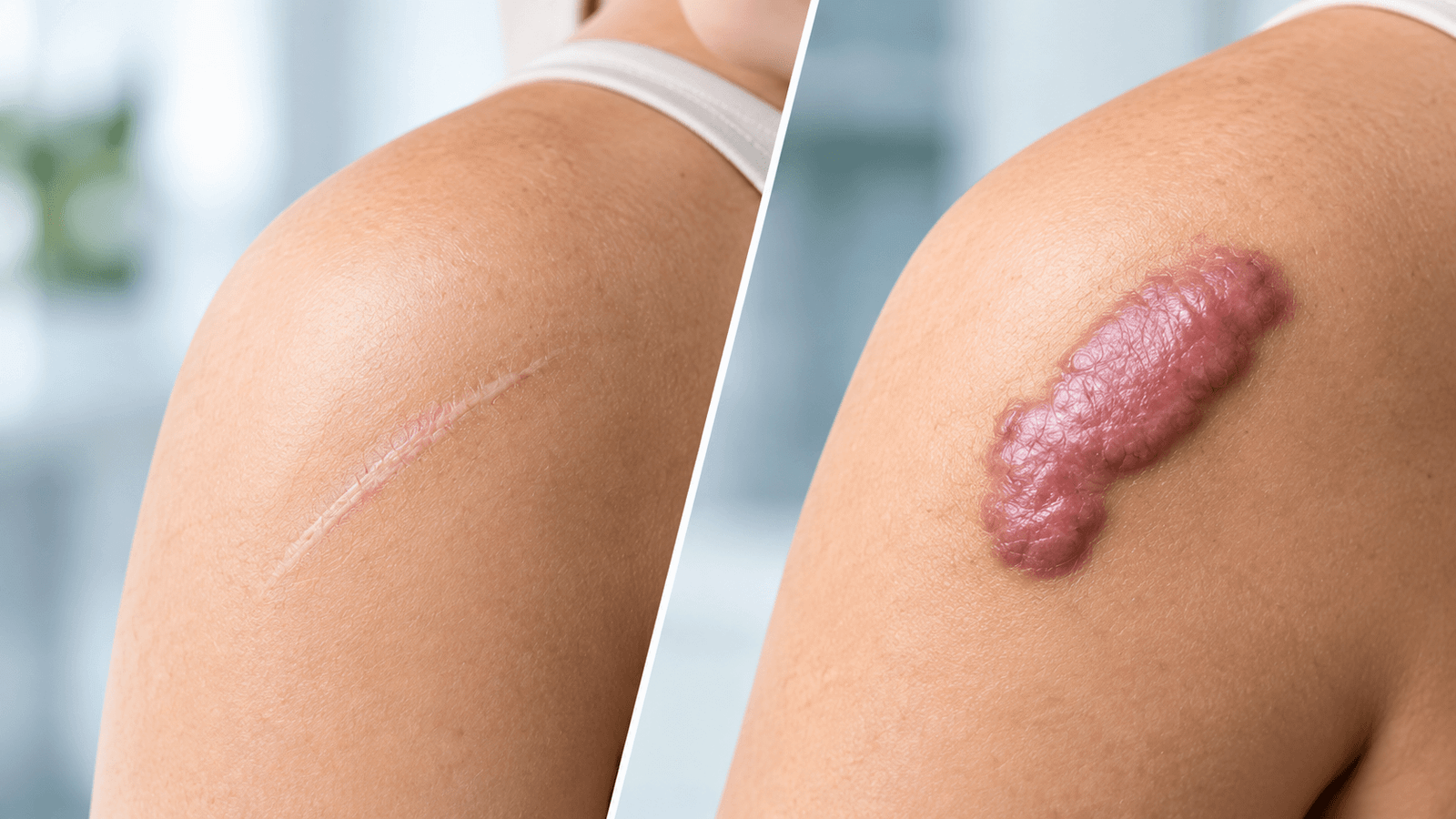
Keloids are common in dermatologic and primary care practice, and many respond well to conservative management. A meaningful subset does not, and each additional intervention changes the clinical picture. A twice-recurrent keloid presents with altered vascularity, less defined borders, and a patient whose confidence in treatment has eroded since first presentation.
The criteria below reflect more than 20 years of dedicated keloid practice and over 10,000 patients treated, many of whom arrived after prior keloid treatment elsewhere.
Keloid Recurrence Changes the Case
Intralesional corticosteroids remain a reasonable first-line intervention for small, early keloids. The concern is what follows when a keloid does not respond: serial injections into a non-responding lesion, repeat excision without an adjuvant protocol, and cryotherapy on darker skin types each carry real costs, including pigmentary complications, patient attrition, and keloid scars that return larger and more symptomatic than baseline.
In our experience, the earlier a refractory keloid reaches specialized care, the better the surgical field and the more straightforward the treatment course. Late referrals remain treatable. They are simply harder, most of all for the patient.
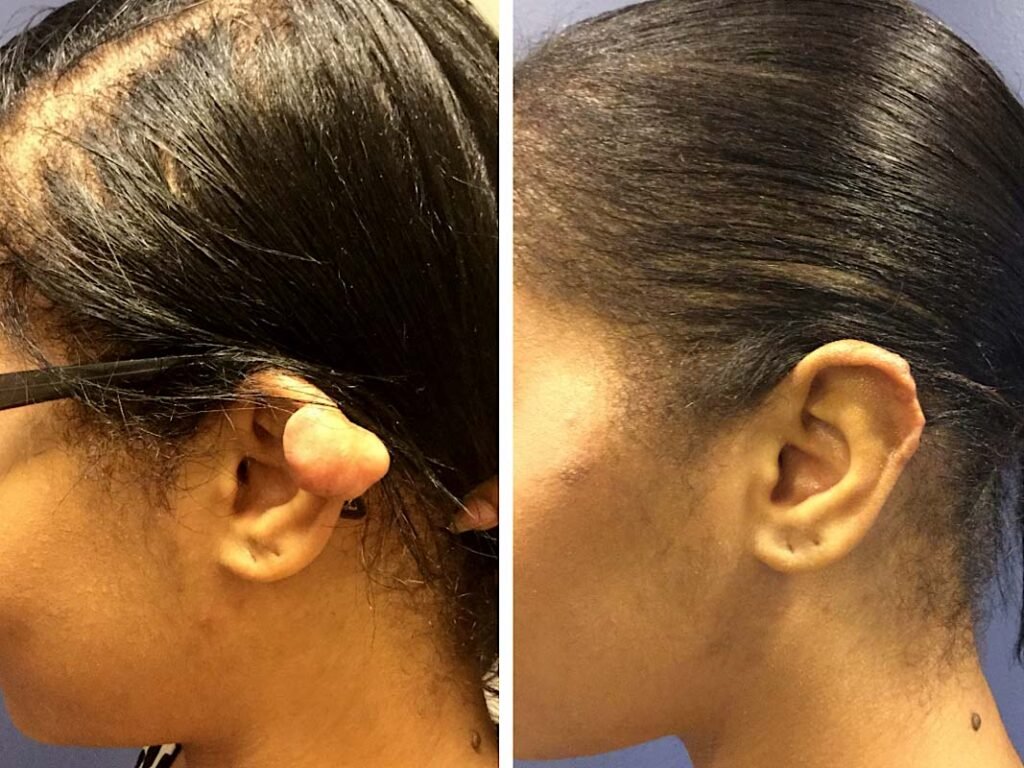
Five Keloid Presentations That Warrant Referral
1. Recurrence after prior keloid treatment. A keloid that has returned after excision, or failed a completed course of intralesional therapy, generally requires a combined-modality approach rather than another round of the same intervention.
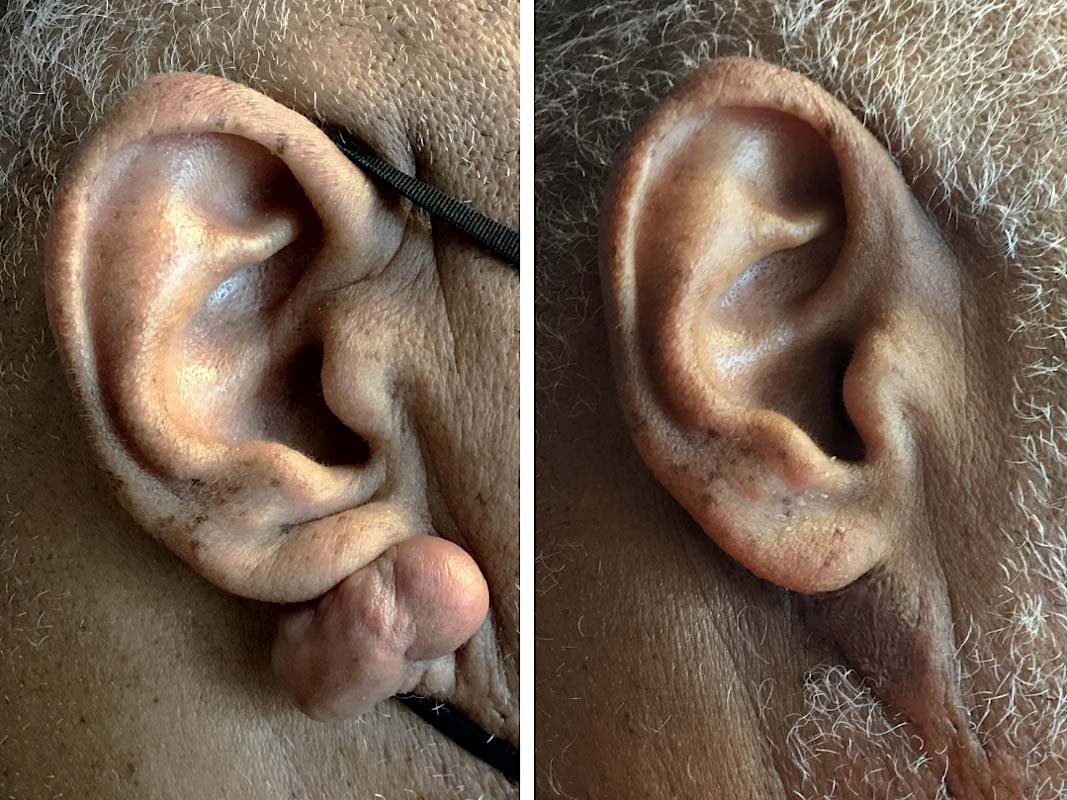
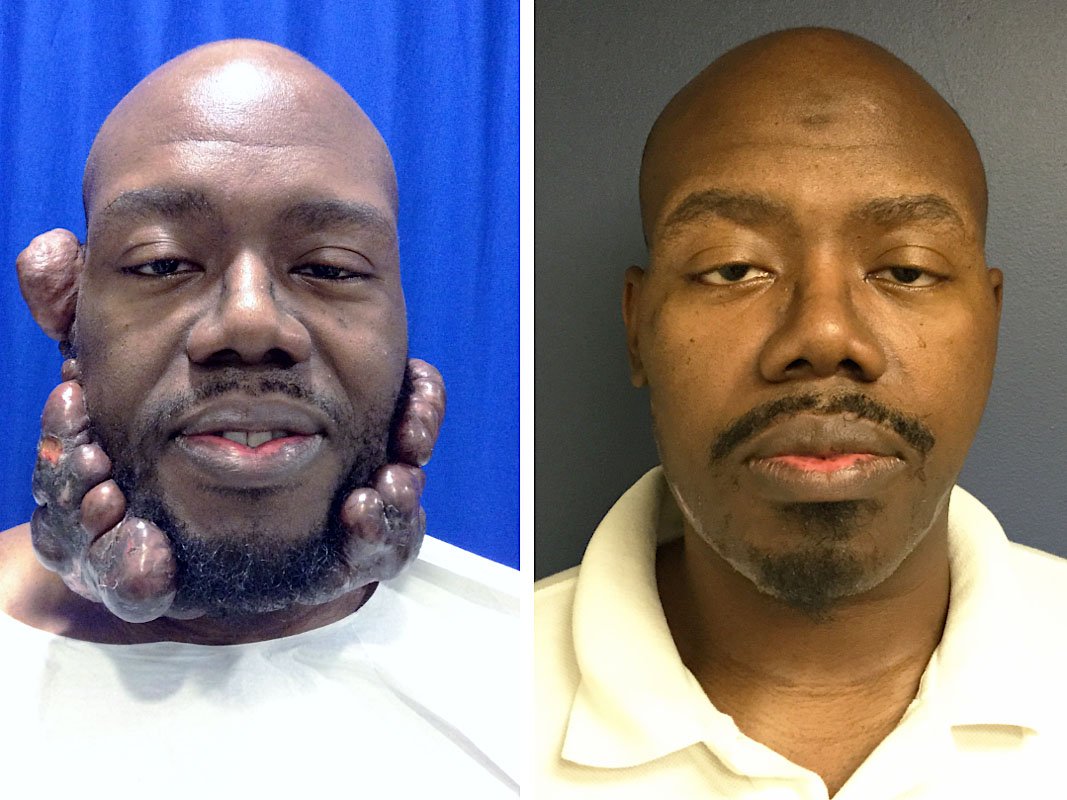
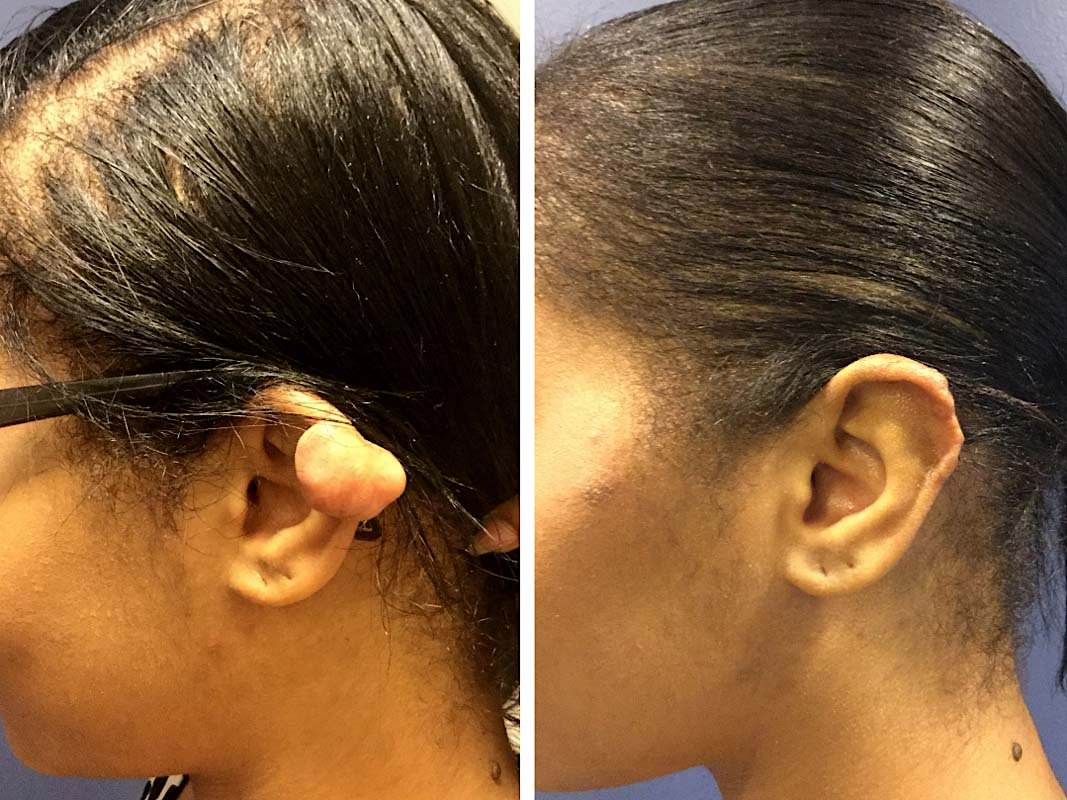
2. Large or pedunculated keloids. Ear, jawline, and chest keloids beyond a few centimeters typically call for flap design, tension management, and structured post-excision protocols that fall outside routine office procedures.
3. Symptomatic keloids. Pain, pruritus, restricted movement, or interference with clothing, hearing aids, or daily function. In our experience these patients rarely improve on observation alone.
4. High-risk anatomy or history. Sternal keloids, multiple simultaneous lesions, or strong family history. This category also includes keloid-prone patients facing planned surgery, where pre-surgical consultation offers the chance to prevent a keloid rather than treat one.
5. Psychosocial burden. When a patient reports avoidance behavior such as covering the keloid, declining photographs, or social withdrawal, the scar has become a quality-of-life condition that warrants definitive treatment.
A one-page version of these criteria is available for your practice.
What Specialized Keloid Treatment Involves
The difference between general management and a dedicated keloid practice is not any single modality. It is the integration of keloid removal and recurrence prevention into one individualized protocol, carried out by a team that performs this work daily.
Our practice maintains a 95% non-recurrence rate among our patients, a population that includes many previously treated keloids. Three elements produce that outcome: surgical technique refined over two decades of keloid-specific work, adjuvant planning matched to lesion behavior and anatomy, and structured follow-up designed to identify early recurrence signals before they become clinical recurrence.
What Referring Physicians Can Expect
Referred patients receive prompt consultation scheduling. Referring physicians receive a treatment summary and outcome updates for their records. Our scope is the keloid; ongoing dermatologic care remains with you. With seven locations nationwide (New York, Cliffside Park, Fort Washington MD, Atlanta, Miami, Sugar Land, and Los Angeles), geography is rarely a barrier to referral.
Continuing Education: “Scar Wars” Keloid Care Masterclass, October 23, 2026
For physicians seeking procedural depth in advanced keloid management, Dr. Jones will lead the “Scar Wars” Keloid Care Masterclass on Friday, October 23, 2026, in Fort Washington, Maryland. This full-day clinical practicum offers 10 CME credits. Enrollment is limited to ten participants, and each participant performs a complete keloid patient case, from diagnosis through aftercare, under direct faculty guidance. The curriculum covers surgical excision, intralesional injection, recurrence-prevention protocols, and integrating keloid treatment services into clinical practice.
Accreditation statement: in support of improving patient care, this activity has been planned and implemented by the Postgraduate Institute for Medicine and Doctor Keloid Scar and Cosmetic Center. Postgraduate Institute for Medicine is jointly accredited by the Accreditation Council for Continuing Medical Education (ACCME), the Accreditation Council for Pharmacy Education (ACPE), and the American Nurses Credentialing Center (ANCC), to provide continuing education for the healthcare team.
Closing Note
Referring a refractory keloid is not a failure of management. It is management. Patients whose keloids reach appropriate care earlier tend to have better surgical options, and in our experience they credit the physician who made the call.
Discuss a Case or Establish a Referral Relationship
Physician line: 888-535-6433. Treatment summaries and outcome updates on every referred patient.